The PoleOS™ Company



Pole attachment tips for successful BEAD deployments
Four tips to reduce friction in attachment processes
The Broadband Equity Access and Deployment (BEAD) program is entering a new phase where funding is no longer the hard part—execution is. As Angie Kronenberg and I discussed in a recent IKE webinar, Winning at BEAD: Accelerating Fiber Broadband Deployment by Navigating Pole Attachment Challenges, the providers who win will be those that treat pole attachments as a strategic discipline, not a back-office task.
Operating under “Benefit of the Bargain” pressure
For providers, the benefit‑of‑the‑bargain round has done more than reset timelines; it has squeezed business cases. Competitive bidding and re‑negotiation have driven many winners to price points they never intended when they first modeled their projects. Those lower award amounts now define razor‑thin margins that must survive make‑ready surprises, permitting delays, and construction cost volatility.
This reality makes disciplined cost management and rapid execution non‑negotiable. The providers that used smart tools and GIS‑driven designs to win grants now have to lean even harder on those same capabilities to preserve returns. Every preventable pole delay, redesign, or rework is effectively margin left on the table.
Why aerial attachments are now mission‑critical
In this new BEAD environment, aerial attachments are no longer just a design preference—they are a primary cost and schedule lever. Tight price points are “forcing the fiber builders to use aerial attachments wherever feasible and safe” in order to stay within their award envelopes. Underground builds, while sometimes unavoidable, are typically more expensive, slower, and more vulnerable to permitting and construction risk.
Maximizing safe, compliant overhead mileage lets providers stretch each BEAD dollar further, serve more locations within the same budget, and better withstand additional cuts that may arise during subsequent negotiations.
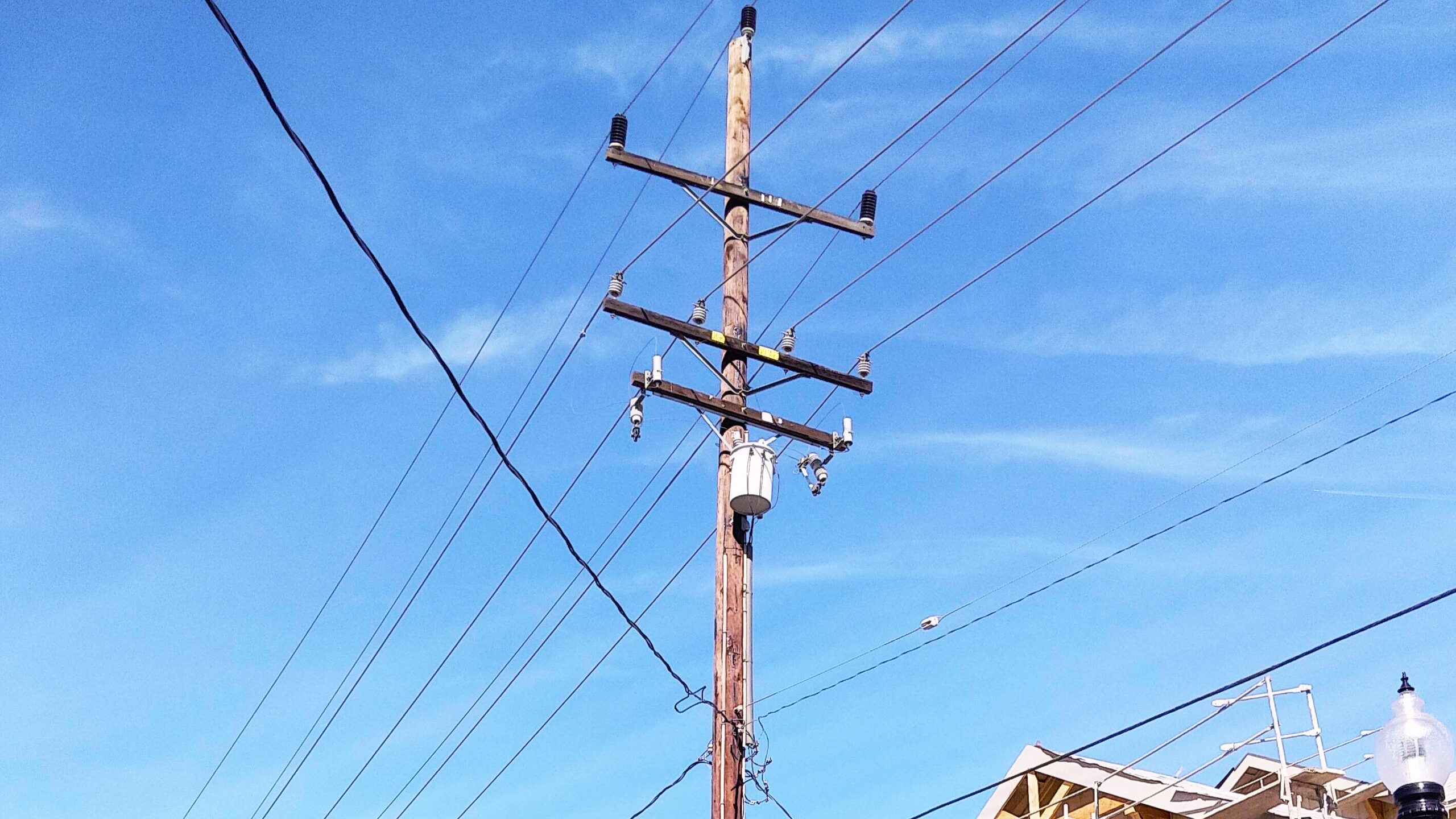

Tip 1: Engage early: Permitting is a relationship game
Early, proactive engagement with permitting agencies is essential. Most federal, state, DOT, city, and county offices simply do not have the staff to absorb a tidal wave of applications overnight. Waiting to engage until after designs are “done” almost guarantees backlogs, rejections, and resubmittals.
Tips to set good permitting groundwork:
- Build relationships months in advance with federal, state, city, county, and DOT permitting contacts.
- Learn exactly what each agency wants to see on plan sets and applications—format, data fields, and level of detail.
- Submit clean, complete applications that make it easier for agencies to say “yes” quickly.
Doing this establishes credibility, reduces the temptation for reviewers to “set your packet aside,” and positions you as a partner who is helping them manage their own resource constraints.
Tip 2: Treat pole owners as strategic partners
The same philosophy on engaging early applies to pole owners. Joint-use teams at utilities and cooperatives also face resource constraints and safety obligations, and very few have surplus staff to process a flood of new attachment requests. Dropping large batches of applications on them and then leaning on regulatory timelines is a recipe for friction.
Instead, strive for structured, proactive dialogue: Discuss project timelines, realistic volumes of pole attachment permits per month, and expectations on both sides. When providers and pole owners reach common ground on what is feasible, projects are far more likely to stay on the needed schedule. A transparent, data‑driven relationship can convert pole owners from perceived obstacles into active enablers.
Tip 3: Regulation as backstop, not primary strategy
Regulatory tools are vital but should be treated as last‑resort backstops, not first‑line tactics. The current FCC leadership has made pole attachments and deployment acceleration an early priority, adopting an order that:
- Codifies new timelines for very large pole attachment applications
- Requires advance notice and “meet and confer” processes before large batches of applications are filed
- Improves self‑help options and speeds approval of qualified contractors for make‑ready
The FCC is also exploring how to streamline wired and wireless builds more broadly—potentially tightening deadlines for local processing of permits and scrutinizing whether permitting fees align with actual local costs. In parallel, Congress continues to consider bills on topics like railroad crossings and federal land permitting.
Still, most private‑sector clients try to resolve conflicts informally before filing complaints, precisely because formal processes are slow, costly, and uncertain. Strong rules align incentives and provide leverage when needed, but genuine collaboration usually delivers faster, better outcomes.
Tip 4: Use digital tools to create a backbone for execution excellence
Digital solutions sit at the center of any credible plan to reduce pole friction and hit BEAD timelines. The most successful providers are already using advanced GIS tools and digital workflows, not only to win bids but to execute them. Once construction begins, those tools become the difference between scalable, predictable deployment and constant firefighting.
Best‑in‑class execution uses digital capabilities to:
- Capture accurate pole data, including photos, clearances, loading, and existing attachments
- Validate designs before submission so that obvious failures never reach permit reviewers
- Package applications in the formats and structures agencies prefer, reducing questions and resubmittals
- Keep designs, applications, field work, and as‑builts in sync, minimizing rework and field surprises
To summarize, high‑quality digital preparation makes it easier for pole owners and agencies to approve work quickly.
How IKE fits into the picture
BEAD success is no longer just about securing funding; it is about execution excellence under compressed timelines and narrow margins. With the vast majority of BEAD fiber projects depending on utility poles, effective pole data collection and management becomes the central nervous system of deployment.
In a race where the finish line is unforgiving, IKE’s solutions turn pole attachment friction into a manageable—and even strategic—advantage.
Learn more about how IKE enables faster broadband deployments
Al Schroeder, P.E., is Vice President of Outside Plant Engineering at ALLO Communications, where he leads engineering and design teams in building Gigabit-capable fiber networks across multiple states. With 30+ years in telecommunications and civil engineering, Al has overseen large-scale fiber deployments, multimillion-dollar capital projects, and disaster recovery efforts. Before joining ALLO in 2018, he held senior leadership roles at Windstream, Alltel, Aliant, and Lincoln Telephone, managing multi-state teams and major infrastructure integrations. A licensed Professional Civil Engineer in Nebraska, Arizona, and Colorado, Al earned his B.S. in Civil Engineering from the University of Nebraska–Lincoln.
Angie Kronenberg is President and CEO of Sligo Solutions LLC, founded in 2024 to advise tech, telecom, broadband companies and trade associations. Previous President of INCOMPAS and Legal Advisor to FCC Commissioner Mignon Clyburn, overseeing broadband policy and universal service modernization, Angie also held roles at the FCC and in private communications law. Angie earned her J.D., magna cum laude, from Columbus School of Law and a B.A., magna cum laude, from Baylor University.

The latest from the IKE Wire
IKE Office Pro expands field-to-finish process with more integrations to leading pole loading analysis, distribution design, and joint-use software
Latest developments enable best-in-class utility workflows, connecting field data col...
Read MoreIKE product updates: 2025 year in review
Recapping our latest developments in overhead distribution asset management 2025 brou...
Read MoreCelebrating 2025 achievements in field data collection: Luck Grove leader in utility pole collection
Utility engineering experts top 220,000 collections in 2025 As we close out 2025, the...
Read MoreSubscribe to the IKE Wire
Get the latest insights on data acquisition and structural analysis from the ikeGPS experts.