The PoleOS™ Company



A guide to reducing risk in grid asset management: How to leverage data and analytics to overcome emerging risks and unlock opportunities in power distribution
- Utilities

Co-written by ikeGPS and ClimaTwin.
The risk landscape for electric utilities is growing more complex and unpredictable. Climate change and extreme weather have emerged as paramount concerns, intersecting with aging infrastructure and other challenges. Climate and weather extremes are no longer just societal problems but, critically, economic as well. In a recent industry survey, energy & utility executives ranked climate change as their top near-term risk – a distinction unique to the sector.1 This comes as no surprise: increasing intensity, duration, frequency, and extent of severe storms, heat waves, wildfires, and floods are pushing decades-old grid equipment to its limits.1 Aging poles, transformers, and wires face strains beyond their original design, resulting in rising failure rates and outages when stressed by extremes.2 According to Swiss Re’s2 analysis of U.S. outage data, over one-third of power outages from 2012–2023 were caused by severe weather, and the frequency of weather-related outages has been climbing steadily.2 Utilities are thus confronted with the reality that yesterday’s “once-in-a-century” events are becoming today’s annual or even monthly occurrences.

Figure 1-United States billion-dollar disaster events have risen markedly over the past four decades (stacked bars by disaster type; black line shows total annual costs). 2023 saw a record 28 billion-dollar events, and total disaster costs peaked near $400 billion in 2017.3
Compounding these physical challenges are regulatory and market shifts. Utilities must balance reliability with decarbonization goals amid policy uncertainties.1 They also face tougher scrutiny from regulators, insurers, and investors regarding resilience and risk disclosure.1 In many regions, insurance premiums are rising, or coverage is being reduced for assets in high climate-risk areas1, pressuring utilities to fortify their systems. The convergence of climate-driven disruptions, aging assets, evolving policies, increasing demands, and land-use shifts means utility leaders must reassess long-term resilience and make strategic investments now to withstand future shocks.1 The following sections delve into specific dimensions of this challenge – from climate-related operational risks and asset integrity to advanced tools like simulation modeling and AI – illustrating how innovative technologies can collaboratively mitigate these emerging risks.
“The volatility in weather impacts how utilities design, construct, and maintain their assets.”1
Brett Willitt
Senior Vice President of Product
ikeGPS
Climate-driven operational and financial risk
Severe weather and climate change are not only reliability issues but also major operational and financial risks for utilities. Climate-driven events increasingly wreak havoc on grid operations: for example, Winter Storm Uri (2021) left at least 5 million customers without power across 14 states2, and Hurricane Ida (2021) took down more than 30,000 utility poles and thousands of transformers in one blow.2 Each outage event carries steep costs – emergency repairs, restoration crews, customer compensation, and lost revenue – which add up to billions of dollars annually.4 The U.S. has sustained 403 billion-dollar weather disasters since 1980, with total damages exceeding $2.9 trillion (inflation-adjusted).3 Notably, 2023 alone saw 28 separate billion-dollar disasters, the highest on record.3, 14 This trend has driven the five-year average of billion-dollar events to over 20 per year, more than double the long-term average.3, 14 In short, climate extremes are imposing historically unprecedented operational strain and financial exposure on utilities.
Utilities must manage two types of climate-driven risk: acute risks from discrete events (storms, wildfires, heatwaves) and chronic risks from longer-term shifts (rising average temperatures, sea-level rise, changing load patterns). Acute events can cause immediate infrastructure damage and prolonged outages, incurring hefty restoration costs and regulatory penalties for reliability violations. Chronic impacts can erode asset life and increase operating costs – for instance, higher ambient temperatures accelerate transformer aging (potentially cutting 20–40% off transformer lifespans under warming scenarios)2, and increased heat and air conditioning loads drive up peak demand and equipment stress.7
“We believe in the concept of non-stationarity. The future will be different than the past… Many planning standards assume the past is a good predictor—but increasingly, it’s not. Seeing a 100-year storm every year proves this.”
Adam Omansky
Chief Executive Officer
ClimaTwin
Financially, these risks threaten utility balance sheets and credit ratings: more frequent disasters can result in expensive recovery debt or rate hikes, attracting regulatory scrutiny. Insurers and investors have started to factor climate resilience into their evaluations, evidenced by insurers withdrawing coverage in high-risk regions and investors calling for transparency on climate risk exposure.1 Indeed, climate risk is now seen as investment risk for utilities. A U.S. government assessment noted that weather-related outages already cost the economy billions annually, a figure expected to grow with climate change – but also that proactive resilience investments now could significantly reduce future losses.4 This backdrop makes clear that failing to address climate-driven operational risk is economically untenable. Utilities that invest in adaptation and hardening stand to reduce outage frequencies and avoid catastrophic financial hits, whereas those taking a reactive approach risk spiraling costs and customer backlash as climate impacts intensify.
Physical asset management and structural integrity
One foundational element of resilience is ensuring the physical integrity of utility assets – especially the vast networks of poles, wires, towers, and other equipment that form the backbone of the electric grid. Much of the U.S. grid infrastructure is decades old, with components like wood distribution poles often exceeding their intended service life. When extreme weather strikes, these aging or structurally weak assets are often the first points of failure. For example, high winds and ice can snap overloaded poles or topple structures that have deteriorated over time. Hurricane Ida’s destruction of 30,000+ poles in 2021 starkly illustrated how vulnerable the overhead grid can be to intense storms.2 To reduce such risks, utilities are turning to advanced tools for asset management and structural analysis.
“We’re really good at evaluating pole loading and structural analysis. IKE PoleForeman lets us create mathematical representations of distribution assets and run empirical simulations.”
Brett Willitt
Senior Vice President of Product
ikeGPS
ikeGPS’s technologies provide a case in point. Solutions like IKE Office Pro and IKE PoleForeman allow utilities to capture precise pole measurements, model structural loads, and identify weaknesses in their overhead infrastructure. National Grid, for instance, leveraged IKE’s pole loading analysis software to evaluate the capacity of its distribution poles under various stressors (wind, ice, additional equipment loads) as part of a climate resilience initiative.5 This analysis revealed “weak points” in the network and informed a targeted grid hardening plan: National Grid is now proactively upgrading over 8,000 poles per year to higher strength standards over 2026–2030.5 By using accurate field data and structural models, they can prioritize replacements for poles that would likely fail in severe weather, thus preventing outages. Structural load analysis (PLA) is now a key component of their resiliency design process, ensuring new poles and retrofits can withstand the higher wind speeds and ice accretion expected with climate change.9
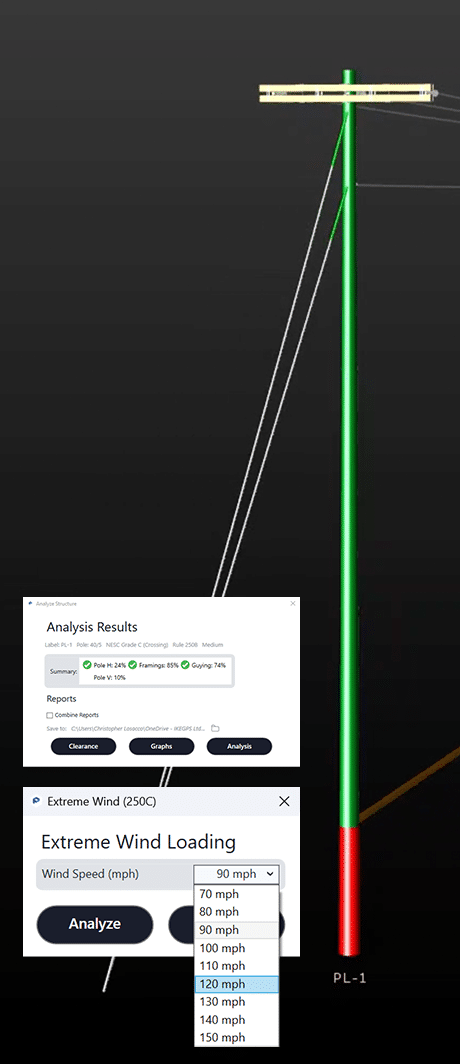
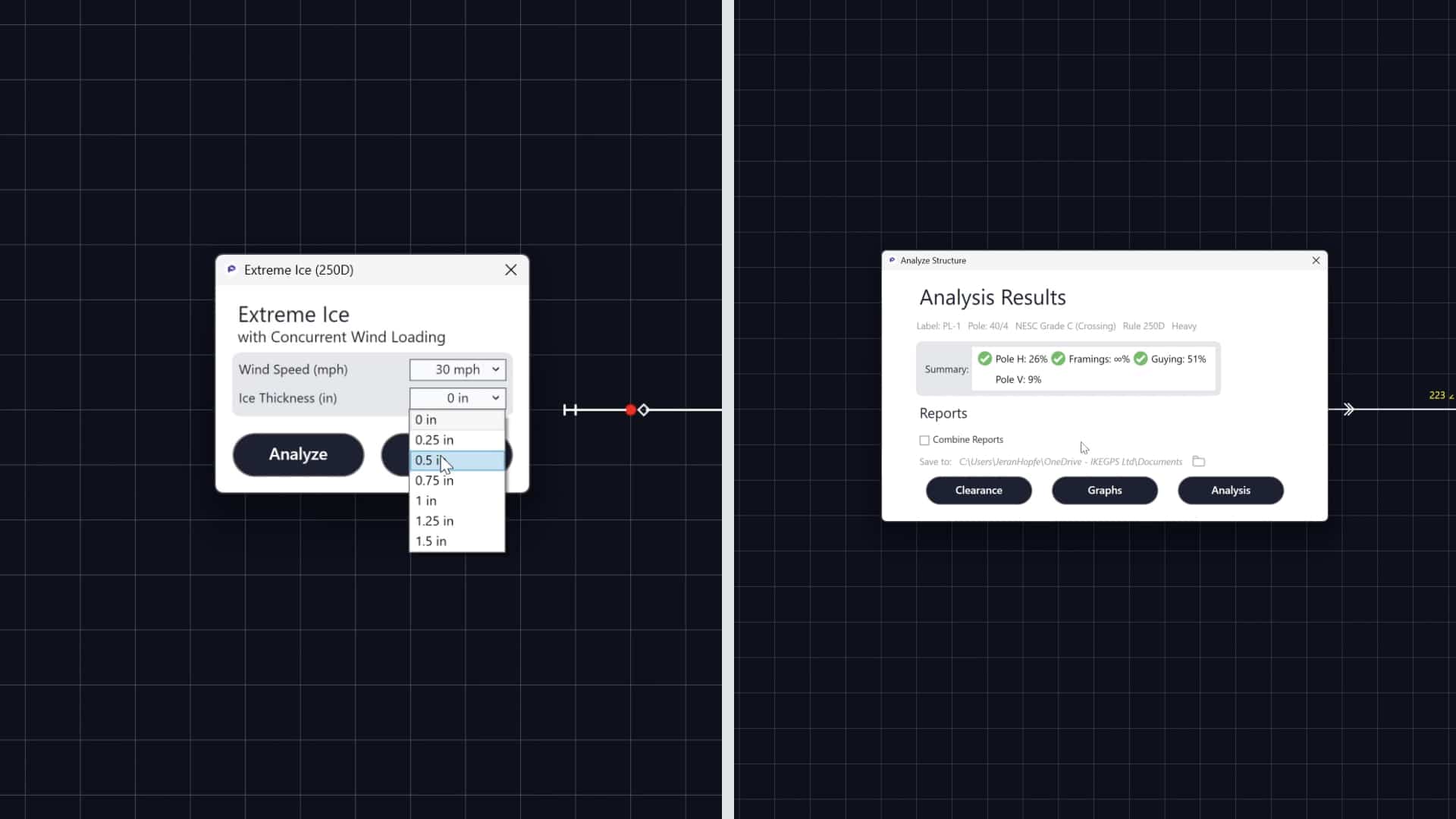
IKE PoleForeman evaluates the capacity of distribution poles under various stressors (wind, ice, additional equipment loads).
Beyond poles, similar asset management strategies apply to transformers, substations, and lines. Regular condition assessments (increasingly done with drones and sensors) and robust engineering standards (e.g., pole strength, flood elevation for substations) are crucial. Modern software and digital twins can simulate how assets will perform under extreme conditions, flagging components at risk of overload or failure. In essence, resilient grid infrastructure begins with sound asset integrity management. By combining field data collection, structural modeling, and standards compliance (such as National Electrical Safety Code wind/ice loading criteria), utilities can reinforce the physical backbone of the grid. IKE and other grid asset management tools enable a shift from reactive repairs (after equipment breaks) to proactive reinforcement – so that poles and wires remain standing when the next storm hits, keeping the lights on for customers.
“Traditionally, utilities treated their networks as homogeneous. What we’re enabling now is a micro lens—granular understanding of asset states, so that capital and O&M investment decisions are smarter and more targeted.”
Brett Willitt
Senior Vice President of Product
ikeGPS
The role of simulation and modeling in risk management
In an era of non-stationary climate risk, utilities can no longer rely on historic weather patterns and decades-old electrical codes alone to plan for the future. This is where simulation and modeling become indispensable for managing risk and making future-ready decisions. Advanced threat modeling techniques – from high-resolution climate simulations to infrastructure “digital twins” – allow utilities to anticipate potential failures and stress-test their systems against a range of scenarios. For example, the Federal Energy Regulatory Commission (FERC) recently acknowledged that system planners “cannot simply project historical weather patterns forward” because climate change is rendering past data inadequate for future forecasting.4 FERC now requires utilities and grid operators to conduct forward-looking extreme weather vulnerability assessments and incorporate climate projections into transmission planning.4 The message is clear: robust simulation of future conditions is a must-do, not a luxury.
“We create digital twins that allow utilities to simulate storm impact, outage likelihood, and capital prioritization based on geolocation, material, and service criticality.”
Brett Willitt
Senior Vice President of Product
ikeGPS
One powerful approach is the use of enterprise asset management (EAM) and infrastructure digital twins coupled with proprietary downscaled climate models, a solution offered by ClimaTwin. By deeply integrating physical asset models with climate data, ClimaTwin enables asset-specific risk simulation over coming decades.6 Instead of a course, top-down assessment, it takes a bottom-up view: each pole, line, or transformer “twin” can be virtually subjected to future hazard scenarios – such as a 100-year windstorm in 2040 or a 2035 heatwave – to evaluate its resilience. ClimaTwin’s platform can visualize and analyze a broad spectrum of hazards (wind, flood, wildfire, ice, etc.) at hyper-local scale for millions of individual assets, decades into the future.6 This granular modeling helps utilities answer questions like: Which specific poles are likely to fail in a Category 3 hurricane landfall? How would a 3°C warming scenario affect substation cooling requirements and outage rates? Armed with these insights, utilities can prioritize upgrades or maintenance for the most at-risk equipment well in advance.
“ClimaTwin delivers dynamic risk scoring at the asset level, not just as an annual report. We continuously assess vulnerability using predictive models and climate econometrics to tie physical exposure to financial risk.”
Adam Omansky
Chief Executive Officer
ClimaTwin
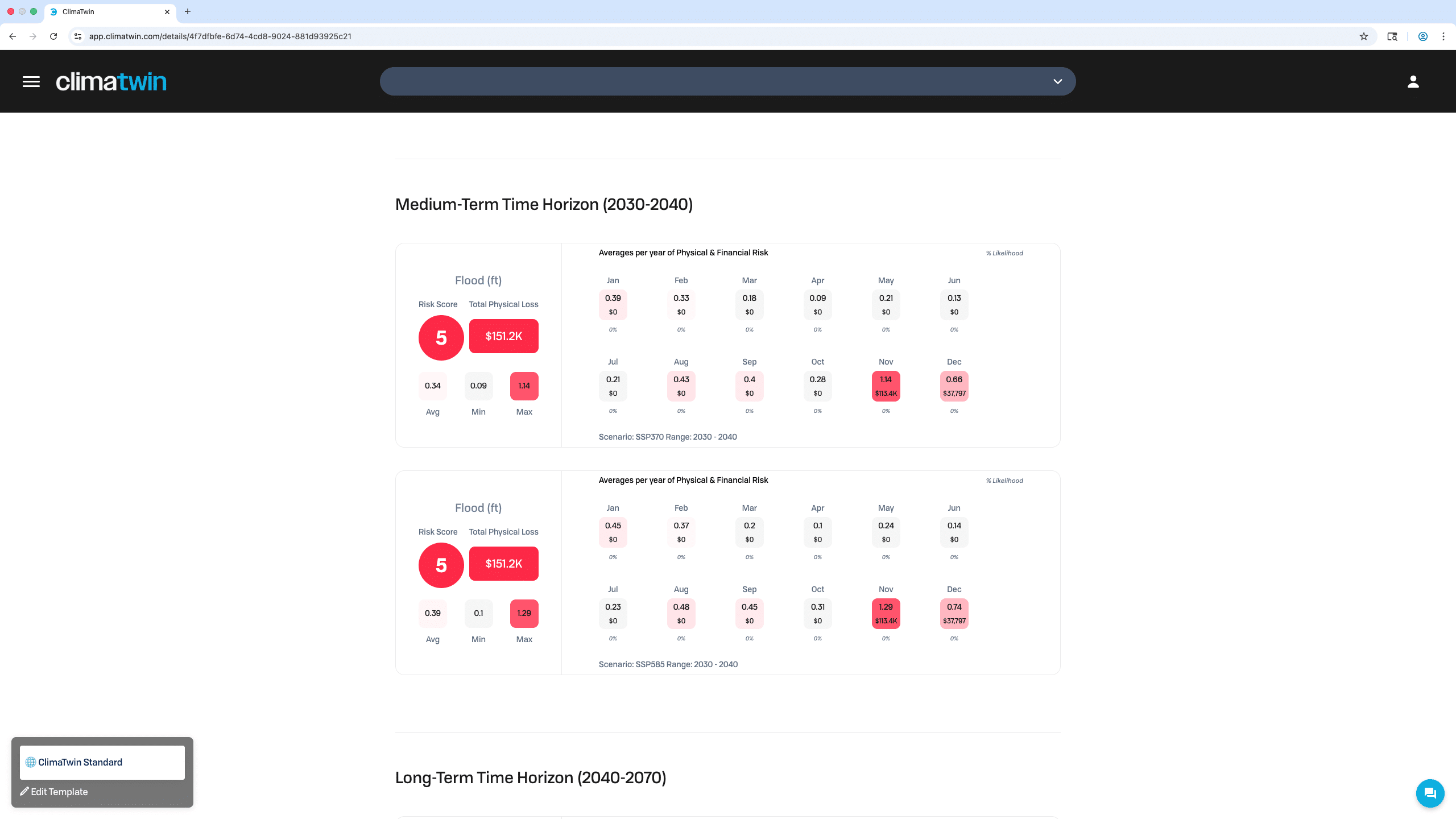
ClimaTwin Portfolio Overview & Visual Intelligence: An interactive dashboard with map views, asset cards, and risk scores to visualize climate exposure, identify high-risk assets, and prioritize adaptation actions across your portfolio.
Simulation isn’t limited to climate hazards; it also encompasses load and operational scenarios. For instance, grid simulation models can explore how the system behaves if many lines are downed or if generation shifts due to weather, helping develop contingency plans. Modeling can integrate cross-sector impacts too – e.g., simulating how a wildfire might simultaneously knock out transmission and limit transportation access for repair crews. On the industry level, EPRI’s new Climate READi framework (2023) provides a standardized methodology for utilities to assess risk and stress-test their systems against extreme weather, then adapt accordingly. The bottom line is that rigorous modeling under uncertainty allows utilities to move from reactive firefighting to strategic, data-informed risk mitigation. By anticipating failure modes and system stresses before they occur, simulation tools (like those from ClimaTwin and others) enable more resilient grid planning and more effective allocation of resources to where they will reduce risk the most.
Use of AI and Machine Learning for asset prioritization
Utilities today are awash in data – from smart meters, sensors, LiDAR surveys, drones, and maintenance logs – far more data than human analysts alone can efficiently process. This is where artificial intelligence (AI) and machine learning (ML) have a transformative role in asset management and risk prioritization. Modern AI algorithms excel at combing through vast datasets to detect patterns, anomalies, and risk factors that would be impossible to catch manually. By leveraging AI/ML, utilities can predict failures before they happen and focus attention on the most critical assets.
“We’re using AI to transform overwhelming model complexity into actionable simplicity. From hundreds of thousands of assets and risk scenarios, we derive a one-to-five score that utilities can act on.”
Adam Omansky
Chief Executive Officer
ClimaTwin
One application is in predictive maintenance. Machine learning models can be trained on historical equipment data (age, loading, past failures, weather conditions, etc.) to recognize the precursors to failure. For example, by analyzing years of transformer health data, an ML model might learn that a certain pattern of oil temperature spikes plus a vibration anomaly predicts an impending breakdown. It can then flag that transformer for immediate inspection or replacement. As a T&D industry report notes, utilities can feed ML systems with “huge volumes of equipment-related data – including installation dates, weather, maintenance records, and failure history – to predict when a specific piece of equipment is at risk of failure,” enabling intervention before an outage occurs.8 This kind of risk scoring helps prioritize assets for repair/upgrade not just by age, but by actual risk level.
AI is also proving invaluable in image analysis and inspections. IKE Insight is a prime example of applying AI to utility asset imagery. Using machine vision and deep learning, IKE Insight can automatically recognize and assess components in street-level photos or LiDAR scans of poles.10 It can detect issues like cracked cross-arms, leaning poles, or “double wood” poles (old poles braced to new ones) that need removal.10 By automating what used to be tedious manual reviews of field photos, AI allows utilities to scale up inspections dramatically – reviewing thousands of pole images to pinpoint a handful that show critical defects or safety hazards.8 This ensures maintenance crews are dispatched to the right locations. Similarly, AI models analyzing satellite and drone imagery can identify encroaching vegetation around lines and even assign risk scores to individual trees based on species, health, and proximity to power lines.8 This enables smarter vegetation management, focusing tree trimming efforts on the specific limbs or areas most likely to cause an outage or fire.
“We capture field imagery, use AI to extract what’s physically in the field, then apply structural and risk modeling to support faster, more accurate decisions.”
Brett Willitt
Senior Vice President of Product
ikeGPS
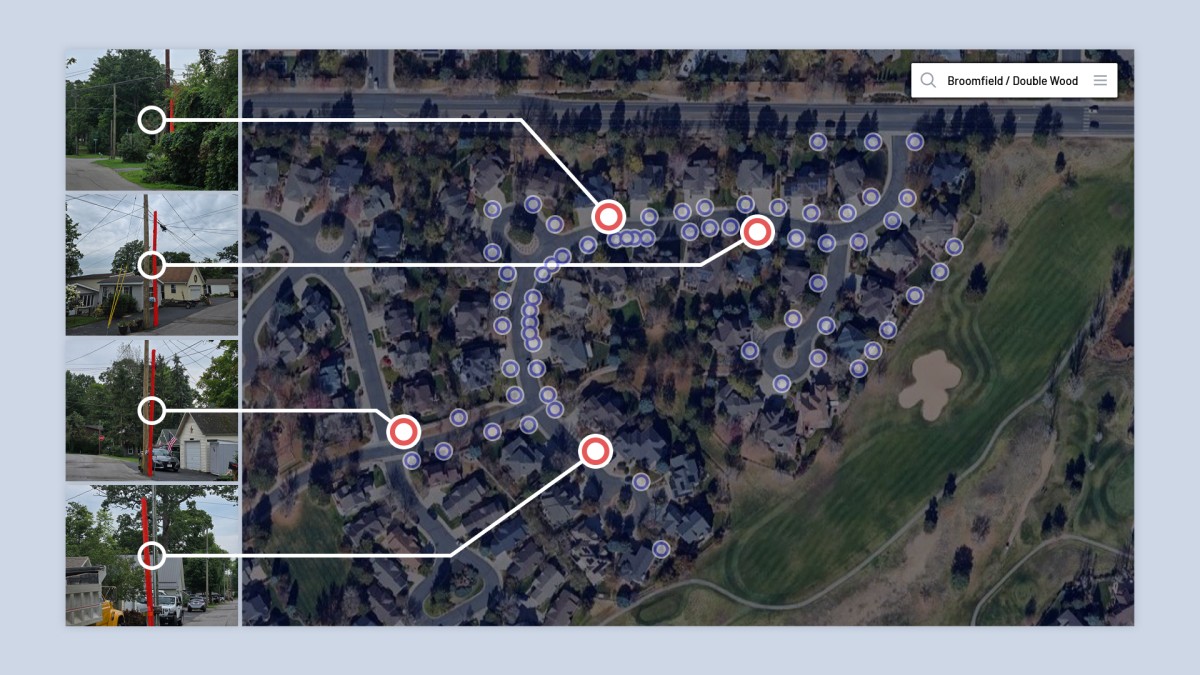
Double Wood Detective from IKE Insight scans street-level imagery to locate instances of double wood (also known as buddy poles, ghost poles, or two poles) at a network level.
Furthermore, AI aids in real-time risk monitoring. Machine learning can continuously ingest data streams (weather forecasts, lightning strikes, grid sensor readings) and compare against learned thresholds to alert operators of emerging threats. As an example, an AI system might integrate weather data, fuel moisture levels, and historical ignition points to produce a live wildfire risk index along each power line.11 Utilities are indeed deploying such AI-driven wildfire mitigation tools, which can prompt temporary line de-energization or targeted patrols in high-risk zones – potentially averting catastrophic fires. More broadly, the utility industry is recognizing that “the answers lie within their data”, and AI/ML is the key to unlocking those answers efficiently.10 By tapping into their power, utilities can make data-driven, risk-informed decisions: prioritizing which aging transformer to replace first, which circuit to underground for fire prevention, or which substation needs sensor upgrades. Early adopters of AI for risk management are seeing gains in safety, compliance, and cost-effectiveness.10 In summary, AI/ML is becoming an essential partner to human expertise – enabling a shift from calendar-based or ad-hoc asset management to predictive and prioritized maintenance that can significantly reduce failures and improve resilience.
Climate-resilient grid concepts and strategies
Building a climate-resilient grid means evolving the design and operation of power systems to better withstand and recover from extreme weather and climate stresses. It involves a combination of hardening physical infrastructure, enhancing operational agility, and sometimes rethinking how the grid is configured. Many utilities are adopting a holistic strategy which translates to a suite of measures – some immediate and tactical, others long-term and innovative. Key climate-resilient grid concepts include:
Hardening and infrastructure upgrades
This focuses on better design and engineering to resist extreme events.
Utilities are elevating or waterproofing substations in flood-prone areas, installing permanent flood barriers, and relocating critical equipment out of coastal or low-lying zones.2 In high-wind regions, poles and transmission towers are being replaced or reinforced with stronger materials (steel or composite poles, guy wire supports) and built to higher wind-speed tolerances. For wildfire resilience, companies are insulating lines or converting to covered conductors and adding fire-resistant coatings to poles to prevent ignition.2 Old transformers are being replaced with new units that have greater capacity and improved cooling, since heat stress can dramatically shorten transformer life.2 Design standards themselves are evolving – for instance, specifying a higher “design flood elevation” for new infrastructure, or updating wind/ice loading standards in the National Electrical Safety Code to reflect more severe weather norms. These upgrades increase the ability of grid components to withstand events without damage.
“A resilient grid starts with understanding the state of your network today. You build a digital twin, simulate stressors, and make real-time and long-term investments with intelligence.”
Brett Willitt
Senior Vice President of Product
ikeGPS
Operational flexibility and data-driven planning
Resilience is not just about brute-force hardening; it’s also about intelligently using data to anticipate and respond.
Utilities are implementing more robust SCADA monitoring and analytics to get early warning of equipment under stress (overheating transformers, etc.).2 By integrating diverse datasets – weather forecasts, real-time sensor readings, outage history – operators can identify hotspots of vulnerability in advance.2 For example, combining flood inundation maps with a social vulnerability index can guide a utility to prioritize protecting a substation that, if lost, would impact a large vulnerable population.2 Many are adopting metrics like Risk Spend Efficiency (RSE), which quantifies the risk reduction per dollar spent, to evaluate resilience investments and ensure they yield positive returns (RSE > 1).2 On the operational side, microgrids and sectionalizing are being deployed to limit outage scope. If a portion of the grid is hit by severe weather, automated controls can island that section (with battery or local generation support) to prevent wider collapse. Fast reconfiguration schemes and mobile substations also help in responding and recovering quickly after an event.
“We can’t build infrastructure that never fails. But we can plan, adapt, and build smarter.”
Brett Willitt
Senior Vice President of Product
ikeGPS
Smart grid innovation and nature-based solutions
Looking to the future, utilities are exploring cutting-edge resilience solutions.
IoT sensors and automation can make the grid more adaptive – for instance, weather sensors on lines that trigger automatic reclosers or reroute power when wind speeds or ice loads exceed certain thresholds.2 Advanced fault location and self-healing grid technologies can isolate damage and restore service faster. There’s also interest in undergrounding lines in select high-risk areas (though expensive, it can pay off where fire risk or hurricane wind damage is recurrent). Some resilience measures leverage nature: a noteworthy example is Duke Energy’s “Living Shoreline” project, where wetlands were restored around a coastal substation to serve as a natural flood buffer. These nature-based defenses can complement engineered structures. Energy storage is another tool – strategically placed batteries can keep critical loads powered during outages and help stabilize the grid during heat waves or cold snaps. In essence, the resilient grid concept embraces innovation: from novel materials (e.g., heat-resistant components that can handle higher temperatures2) to redesigned urban substations (such as underground or modular substations for storm protection2).
Crucially, building a climate-resilient grid also involves organizational preparedness and culture. Utilities are conducting regular emergency drills for extreme events, forging mutual aid agreements for faster restoration, and engaging community stakeholders in resilience planning (ensuring backup power for hospitals, cooling centers for heat emergencies, etc.). By investing across these dimensions – hardening, smart operations, innovative tech, and preparedness – utilities move toward a grid that not only survives the “new normal” of climate extremes but also recovers swiftly, thereby safeguarding customers and the utility’s financial health. Combining structural integrity tools with climate intelligence can inform many of these resilience measures, from targeted infrastructure upgrades to data-driven planning.
Data integration and cross-functional collaboration
Addressing complex climate risks requires breaking down traditional silos and integrating data and expertise across the utility enterprise. Data integration is fundamental: utilities must bring together information from meteorology, engineering, operations, and finance to get a complete picture of risk and to formulate effective responses. In practice, this means linking previously disparate systems – for example, combining detailed asset data (pole conditions, transformer ages) with high-resolution climate hazard data (flood plains, wind maps) in one analytic platform. ClimaTwin’s approach of connecting “complex climate models and infrastructure digital twins” illustrates the power of integration: it unites climate science with engineering models to generate hyper-local asset risk insights.6 Similarly, IKE’s tools feed rich field data (measurements, images, GIS locations of poles) into utility databases, ensuring that digital models reflect real-world conditions. When these data streams converge, utilities can perform multi-factor analyses that were previously impractical – for instance, mapping out which circuits have both high wildfire fuel density and older pole infrastructure, indicating a priority for preventative grid hardening. As one industry guide advises, “Utilities should integrate diverse data sources – including weather data, sensor readings, and historical outage records – to create a comprehensive dataset for predictive analytics.”12 This comprehensive view enables more accurate forecasting and risk assessment.
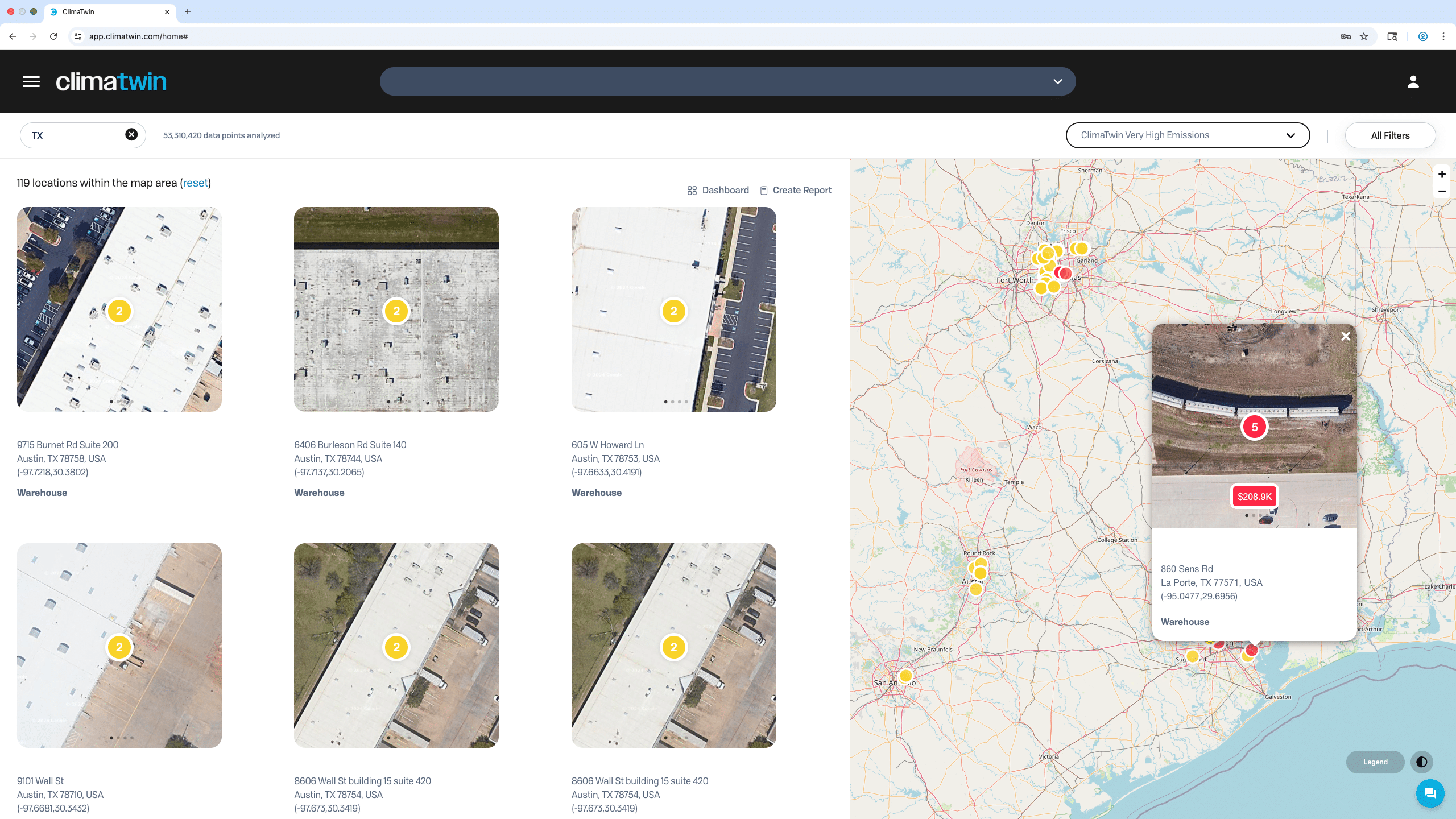
ClimaTwin Asset Intelligence View: Interactive visuals, narrative sections, and scenario-driven context to reveal asset-level risks, support resilience planning, and guide executive, capital, and engineering decisions.
Equally important is cross-functional collaboration within the organization. Climate resilience is not solely the domain of the planning department or the emergency response team – it touches virtually all functions: operations, engineering, finance, regulatory affairs, and community relations. Forward-looking utilities are establishing climate risk working groups that bring these departments together to share insights and coordinate strategies. For example, operations personnel can provide real-world failure data and outage impacts, which inform the engineering models used by planners. Financial analysts can evaluate the cost-benefit of various mitigation projects, while regulatory teams ensure that any plans meet emerging requirements or can be supported in rate cases. This collaborative approach was evident in National Grid’s development of its Climate Change Vulnerability Study and Resilience Plan, which evaluated systems and operations company-wide.8 By engaging diverse experts, they ensured the plan covered everything from engineering upgrades to emergency response improvements.
“We’re a contributor to ClimaTwin’s modeling and also benefit from the risk feedback loop they provide. Together, we help utilities make better investment decisions.”
Brett Willitt
Senior Vice President of Product
ikeGPS
Technology providers are facilitating collaboration by building platforms that multiple stakeholders can use. A climate risk dashboard, for instance, might be used by asset managers to prioritize upgrades, by executives to inform investment decisions, and by regulators or public stakeholders to understand utility plans. When everyone works from a “single source of truth” data-wise, it focuses the collaboration on solutions rather than debates over data validity. Additionally, cross-industry collaboration is growing. Utilities are partnering with climate modelers, national labs, and leading technology solutions like ClimaTwin to gain capabilities they may not have in-house. We also see open data initiatives (e.g., sharing climate and outage data) that encourage broader problem-solving. The scale of climate challenges often exceeds a single utility’s capacity, so learning from peers (through industry groups, EPRI studies like Climate READi, etc.) is invaluable. In summary, tearing down data and organizational silos enables a more proactive and cohesive response to climate risks. By integrating data streams and fostering teamwork across functions, utilities can better identify hidden vulnerabilities and implement cross-cutting solutions that reduce risk. Collaboration ensures that when a plan is executed – say, a major grid hardening investment – everyone from field engineers to CFOs to regulators is aligned on the objectives and metrics of success.
“All assets—whether data centers or hospitals—ultimately depend on reliable power. That’s why energy resilience has become the top externality across industries.”
Adam Omansky
Chief Executive Officer
ClimaTwin
Hyperlocal climate modeling and socio-economic factors
Not all climate risks are created equal across a utility’s service territory. Impacts can vary dramatically from one location to another, depending on microclimates, geography, and community vulnerabilities. This has led to an emphasis on hyperlocal climate modeling – resolving climate projections and weather data at high spatial granularity – and incorporating socio-economic factors into risk assessments. By zooming in on the neighborhood or even asset level, utilities can uncover localized risks (and inequities) that broad-brush analyses might miss.
“We’re providing risk intelligence down to the asset level—down to the single pole. Instead of just assessing regions or circuits, our models reflect specific geolocation, material, and asset age.”
Adam Omansky
Chief Executive Officer
ClimaTwin
ClimaTwin’s platform is emblematic of this trend. It provides site-specific climate risk insights at the scale of individual assets, enabled by downscaling global climate models to a hyper-local level.6 This means it can project, for example, the future frequency of 100+ mph wind gusts at each pole’s GPS coordinates or the flood depth at a particular substation under a 2050 hurricane scenario. Such precision is crucial because even within a single utility region, exposure to hazards can be highly uneven – one valley might experience far stronger winds due to channeling effects, or one side of town might flood while another stays dry. Hyperlocal modeling captures these nuances, allowing utilities to tailor their mitigation measures. For instance, they might find that poles in one district need a higher wind rating due to topography, while another area requires more aggressive tree trimming due to microclimate-driven ice storms. This contrasts with older methods that applied uniform standards system-wide, which could over-harden some areas and under-protect others. By simulating “future weather and climate extremes… hyper-localized down to the specific geolocation of each asset,” utilities can allocate resilience investments with pinpoint accuracy.6
“The risk scoring is configurable by asset type, age, and location. That’s how utilities get precision.”
Adam Omansky
Chief Executive Officer
ClimaTwin
Incorporating socio-economic factors adds another critical dimension. Climate risk is ultimately about impact on society – and not all communities have the same ability to prepare for or recover from disasters. Utilities are increasingly overlaying social data (population demographics, income levels, critical infrastructure locations like hospitals) onto their asset risk maps. This helps ensure that efforts to bolster resilience also advance equity and reliability for the most vulnerable customers. For example, if hyperlocal modeling shows two substations at equal flood risk, but one serves a dense urban center including hospitals while the other serves an industrial zone, a utility might prioritize flood defenses at the former first due to the higher societal stakes. One approach, as suggested by Swiss Re researchers, is to superimpose social vulnerability indices on top of hazard exposure maps to guide investment decisions.2 By doing so, a utility can identify “hotspots” where a climate hazard intersects with high social vulnerability – areas where an outage or service loss would be especially damaging to public safety or economic well-being. These might be low-income neighborhoods that historically face longer outage durations or communities with limited evacuation resources in disasters. Addressing such areas proactively can reduce disproportionate impacts. This aligns with the concept of “climate justice,” ensuring that resilience measures protect those who might otherwise bear the brunt of climate change effects.
“We’re taking model complexity—including millions of assets, greenhouse gas emissions scenarios, and cascading hazards—and turning it into a one-through-five risk score. That’s what enables decision-making at scale.”
Adam Omansky
Chief Executive Officer
ClimaTwin
In practice, some utilities are partnering with local governments and researchers to map community vulnerabilities alongside their grid. Tools exist (often GIS-based) that combine utility outage risk with metrics like FEMA’s social vulnerability index or health data. The results inform not only engineering choices but also customer support programs (e.g., providing backup generators to medically dependent customers, or targeted communications in multiple languages for emergency prep). Hyperlocal climate modeling also improves operational planning: utilities can forecast which specific neighborhoods are likely to need faster response in a coming storm and stage crews nearby accordingly. Overall, the fusion of granular climate science with socio-economic awareness represents a forward-thinking approach to resilience. It ensures that investments are not only technically sound but also socially informed. By focusing on the hyper-local scale, utilities like those using ClimaTwin can both mitigate risk asset-by-asset and uphold their mandate to provide reliable service to all communities, including the most vulnerable, in the face of escalating climate threats.
“Our system includes short-, medium-, and long-term projections—today out to 2030, 2040, and 2070. It’s all asset-specific, and paired with plain language summaries that describe risk, vulnerability, and recommended responses.”
Adam Omansky
Chief Executive Officer
ClimaTwin
ROI and regulatory/compliance impacts of resilience investments
Utility executives and regulators alike are keenly focused on the return on investment (ROI) of resilience measures and the evolving regulatory landscape that governs them. Strengthening the grid against climate risks often requires significant upfront capital – replacing infrastructure, deploying new technology, hardening systems – so it’s critical to quantify the benefits (avoided costs, improved reliability) to justify these expenditures. Fortunately, a growing body of evidence suggests that well-targeted resilience investments can yield very strong returns over time, in addition to meeting compliance obligations and stakeholder expectations.
Multiple studies have found that every dollar spent on mitigation or resilience yields several dollars in avoided damages. A landmark analysis by the National Institute of Building Sciences demonstrated that, on average, “natural hazard mitigation saves $6 for every $1 spent” in future disaster costs.13 This 6:1 benefit-cost ratio (or higher for certain hazards) underscores that proactive upgrades are far cheaper than post-disaster repairs and losses. For electric utilities, benefits manifest as fewer and shorter outages (improving reliability indices), reduced emergency repair costs, lower insurance premiums, and avoiding catastrophic equipment failures that could result in regulatory fines or liability (for example, preventing a wildfire ignition can avert billions in potential claims). ClimaTwin reports that its users see on the order of 5–10× near-term returns on resiliency investments by strategically mitigating risks identified by its analytics.6 In other words, by prioritizing the most at-risk assets and areas, utilities can achieve a very high ROI – spending, say, $1 million on targeted pole replacements or flood barriers that avert $5–10 million in outage costs and damage over the ensuing years. Moreover, these investments often have compounding lifetime benefits (e.g., a stronger pole prevents not just one outage but remains in service for decades of storms).
Regulators are increasingly supportive of such expenditures, as the cost of inaction becomes clear. We are seeing regulatory mandates and incentives align with resilience goals. FERC and NERC are instituting new reliability standards specifically addressing extreme weather – for instance, requiring transmission planners to assess and design for once-in-a-century heat and cold events.4 Utilities must comply by integrating climate projections into their planning criteria (no longer assuming historical averages). Additionally, state utility commissions have begun to require climate risk assessments and resilience plans as part of regular planning and rate case submissions. For example, in California, utilities must submit annual Wildfire Mitigation Plans detailing how they will minimize ignitions and harden the grid against fire threats.10 Non-compliance or inadequate plans can result in penalties or rejection of cost recovery. On the flip side, regulators are allowing recovery (through rates) of prudent resiliency investments, recognizing them as necessary for long-term service reliability. Some have even authorized special resilience bonds or securitization for large hardening programs, acknowledging that the alternative – massive outage costs or disaster recovery charges – would be worse for ratepayers.
Another compliance factor is the anticipated climate risk disclosure requirements. Federal agencies, state governments, and financial regulators have signaled that utilities (especially publicly traded ones) should disclose material climate-related risks in their financial reports. For example, under state jurisdiction, California’s SB 261 Climate‑Related Financial Risk Act requires large companies operating in the state, such as PG&E, Southern California Edison, and San Diego Gas & Electric, to publicly disclose their climate‑related financial risks along with the strategies they are implementing to address them. A utility that can show regulators and investors that it has a robust climate resilience strategy – supported by hard data and analytics – positions itself favorably, potentially lowering risk premiums on financing and avoiding regulatory censure. There is also movement in rating agencies incorporating resiliency into credit ratings, meaning the ROI of resilience may include preserving lower borrowing costs. In sum, the regulatory environment is moving from passive oversight to active encouragement of resilience. FERC’s recent orders (896, 897 in 2023) and new NERC standards demand forward-looking risk management4, while state bodies are pressing utilities to be transparent and proactive about climate threats. Utilities that invest now not only reap direct ROI through avoided outages but also ensure compliance and goodwill that supports their financial stability. By contrast, those that delay may face not just higher damages later but also regulatory backlash for negligence. The clear trend is that resilience spending, when guided by sound analysis, is viewed as prudent and necessary – with regulatory frameworks evolving to support cost recovery for such forward-looking investments.
Future technological trends and value alignment
Looking ahead, the electric utility industry’s efforts to mitigate risk and enhance resilience will be bolstered by emerging technologies and a strong alignment with broader corporate and societal objectives. As climate challenges intensify, utilities are effectively becoming technology companies – adopting advanced tools to monitor, predict, and respond in real-time – all while demonstrating their commitment to the customers and communities they serve.
On the technology front, we can expect to see wider deployment of sensors and Internet of Things (IoT) devices across the grid. Tiny, inexpensive sensors can be attached to poles, lines, and transformers to constantly measure strain, vibration, temperature, and other indicators. When paired with edge computing and AI, these devices can autonomously flag issues (like a pole starting to lean or a line sagging dangerously) and even initiate self-healing actions. Edge intelligence might trip localized switches or reconfigure circuits instantly in response to detected threats, creating a more autonomous, self-protecting grid. Drones and robotics will handle more routine inspections and emergency patrols, accessing hard-to-reach areas right after storms to speed up damage assessment. Machine vision algorithms will get even more sophisticated at diagnosing equipment condition from imagery, reducing the need for manual field checks.
Another trend is the rise of advanced energy storage and distributed energy resources (DERs) as resilience tools. By 2030, many neighborhoods may host community battery banks or solar-plus-storage microgrids that can island during outages. These DERs, orchestrated by intelligent control software, can keep critical facilities powered and even assist the main grid in recovery. Microgrid controllers will evolve to manage clusters of resources, optimizing for reliability. Additionally, weather forecast technology itself is improving – hyperlocal forecasting (sometimes called “nowcasting”) using AI will enable utilities to predict, for example, the precise path of a developing thunderstorm and preemptively re-route power or dispatch crews accordingly. This kind of granular foresight could become a standard feature in control rooms.
Crucially, many of these technology initiatives are closely tied to key performance indicators (“KPIs”).
Resilience
A resilient grid is inherently a cleaner grid in many respects. By integrating more renewables and storage (to meet climate mitigation goals), utilities also gain resilience benefits through resource diversity and flexibility. Additionally, resilience drives customer and community confidence as well as market value.
Good Corporate Governance
Incorporating climate risk management into utility governance structures – via dedicated board oversight, transparent reporting, and stakeholder engagement – is becoming a hallmark of good governance. Institutional investors are pressing for this, demanding that utility leaders prioritize climate risk at the boardroom level2. Embracing tools like ikeGPS and ClimaTwin is part of that governance response, as these tools provide the data and transparency needed to manage and communicate risk effectively.
In the future, we may also see utilities leveraging blockchain or secure data platforms to collaborate on resilience (sharing grid stress data or mutual aid resources), ensuring trust and auditability in how data is used – aligning with governance best practices. Moreover, reporting frameworks like the International Sustainability Standards Board (ISSB) and the Canadian Sustainability Disclosure Standards (CSDS) are increasingly mandatory, and utilities will need to report not just risks but how technology is being used to mitigate those risks. Those who can show concrete improvements (e.g., “We have reduced expected outage minutes under a 100-year storm by 50% through these investments”) will stand out as market leaders.
In closing
From emerging climate threats to the promise of advanced analytics, the electric utility industry is at an inflection point. The background and context presented here – around climate-driven risks, asset integrity, modeling, AI, resilience strategies, data integration, hyperlocal analysis, ROI, regulatory shifts, and future tech – all coalesce toward a single overarching theme: utilities must innovate and collaborate to build a safer, more resilient grid for the future. IKE and ClimaTwin, through their respective technologies, embody the kind of collaboration that can help utilities achieve this goal. By marrying IKE’s precise field data and structural expertise with ClimaTwin’s climate intelligence and predictive modeling, utilities gain a powerful, unified approach to risk management. It means having the foresight to know which assets are vulnerable and the tools to reinforce them in time.
“We’re a contributor to ClimaTwin’s modeling and also benefit from the risk feedback loop they provide. Together, we help utilities make better investment decisions.”
Brett Willitt
Senior Vice President of Product
ikeGPS
It means translating climate science into actionable plans on the ground – strengthening poles, rerouting lines, protecting communities – with a clear eye on costs and benefits. For utility executives reading this, the message is optimistic: while the challenges are undeniably great, the solutions at hand are equally formidable. Through strategic deployment of these emerging technologies and cross-domain partnerships, electric utilities can not only navigate the turbulence of climate change but do so in a way that improves reliability, satisfies regulators, and serves customers and society at large.
“All assets—whether data centers or hospitals—ultimately depend on reliable power. That’s why energy resilience has become the top externality across industries.”
Adam Omansky
Chief Executive Officer
ClimaTwin
References
- Protiviti, “New Top Risks Survey: Evolving Challenges for Energy & Utilities,” May 2025, blog.protiviti.com.
- Swiss Re Institute, “Avoiding Gridlock: The Impact of Climate on Electric Grids,” June 2024 – swisssre.com.
- NOAA NCEI – U.S. Billion-Dollar Weather and Climate Disasters data (1980–2024) – climate.gov.
- GAO Report “Electricity Grid Resilience – Climate Change” (July 2021) – gao.gov.
- ikeGPS Case Study, “National Grid: Climate-Resilient Grid with Pole Loading Analysis,” 2023 – ikegps.com.
- ClimaTwin Press Release, “Climate Risk Intelligence for Electric Utilities,” Mar 2023 – climatwin.com.
- McKinsey, “How to Increase Grid Resilience through Targeted Investments,” Dec 2021 – mckinsey.com.
- ikeGPS Case Study, “National Grid Creates a More Climate-Resilient Grid with Accurate Pole Loading Analysis,” accessed 2025 – ikegps.com.
- ikeGPS, “IKE Insight – Intelligent Automation for Utility Poles,” accessed 2025 – ikegps.com.
- T&D World, “How Utilities Use Machine Learning for Risk Management,” June 2022 – tdworld.com.
- Latitude Media, “Utilities want AI for Climate Resilience,” accessed 2025 – latitudemedia.com.
- RefinQ Blog, “How Utilities Can Mitigate Environmental Risks with Advanced Forecasting,” Jan 2025 – refinq.com.
- FEMA/NIBS, “Natural Hazard Mitigation Saves” (2018 interim report) – fema.gov.
- Yale Climate Connections, “U.S. Disasters Set Record in 2023,” Jan 2024 – yaleclimateconnections.org.
About IKE
We’re ikeGPS, the PoleOS™ Company. We help electric utilities, communications companies, and their engineering providers gain actionable insights on overhead infrastructure. Our data acquisition and analysis solutions transform how to design, construct, and inspect overhead assets.
IKE’s suite of solutions have wide-ranging use cases including pole inspections, field data collection, pole loading analysis, make-ready engineering, network-level assessments, and permitting. They enable dramatic productivity gains, reduce risk, and optimize investments, while upholding safety standards.
With two decades of industry expertise, IKE has become the standard for eight of the 10 largest investor-owned electric utilities in North America.
Driven by our commitment to essential infrastructure and to the success and well-being of those who manage it, IKE innovates for the next generation of power networks.
About ClimaTwin
ClimaTwin® is a B2B SaaS solution that empowers stakeholders to assess the physical and financial impacts of future weather and climate extremes on infrastructure assets and the built environment.
Table of contents
- Climate-driven operational and financial risk
- Physical asset management and structural integrity
- The role of simulation and modeling in risk management
- Use of AI and Machine Learning for asset prioritization
- Climate-resilient grid concepts and strategies
- Data integration and cross-functional collaboration
- Hyperlocal climate modeling and socio-economic factors
- ROI and regulatory/compliance impacts of resilience investments
- Future technological trends and value alignment
- In closing
IKE helps electric utilities reduce risk in grid asset management
Related resources
National Grid creates a more climate-resilient grid with accurate pole loading analysis
National Grid positioned themselves to effectively strengthen their electric system, leveraging IKE PoleForeman to improve their understanding of vulnerabilities across their grid. This proactive approach...
Read Now
Video chat: Challenges and opportunities for Power Delivery leaders (part 1)
Overview Energy industry expert and author, Peter Kelly-Detwiler, moderates a discussion with Dennis Elsenbeck, head of the energy practice at Phillips, Lytle LLP and former...
Read Now
Four Practical Steps to Grid Resiliency Through Advanced Overhead Infrastructure Management
Join us for an insightful webinar where we dive into the pressing issue of extreme weather events and their impact on the utility industry. Our...
Watch Now