The PoleOS™ Company



NESC Weather Loadings
The National Electric Safety Codes (NESC) provides three weather loading requirements to help safeguard poles from the effects of weather. Of the three, the load that has the most significant effect on the pole rules the design.
The weather loading rules are:
NESC Rule 250B: General Ice and Wind
Heavy, medium, or light load analysis is needed based on the location
NESC Rule 250C: Extreme Wind
Such as those that come with extreme summer storms
- Required for poles 60+ feet above ground to withstand winds up to 150 mph
- Commonly used on poles less than 60 feet for hardening feeders to improve system resiliency, restoration times, and reliability indices (i.e. SAIDI, SAIFI, CAIDI)
NESC Rule 250D: Extreme Ice with Concurrent Wind
Such as those that come with extreme winter storms
- Provides geographic ice and wind loadings based on historical meteorological data
- Ice loads can reach 1.50 inches with wind speeds up to 60 mph
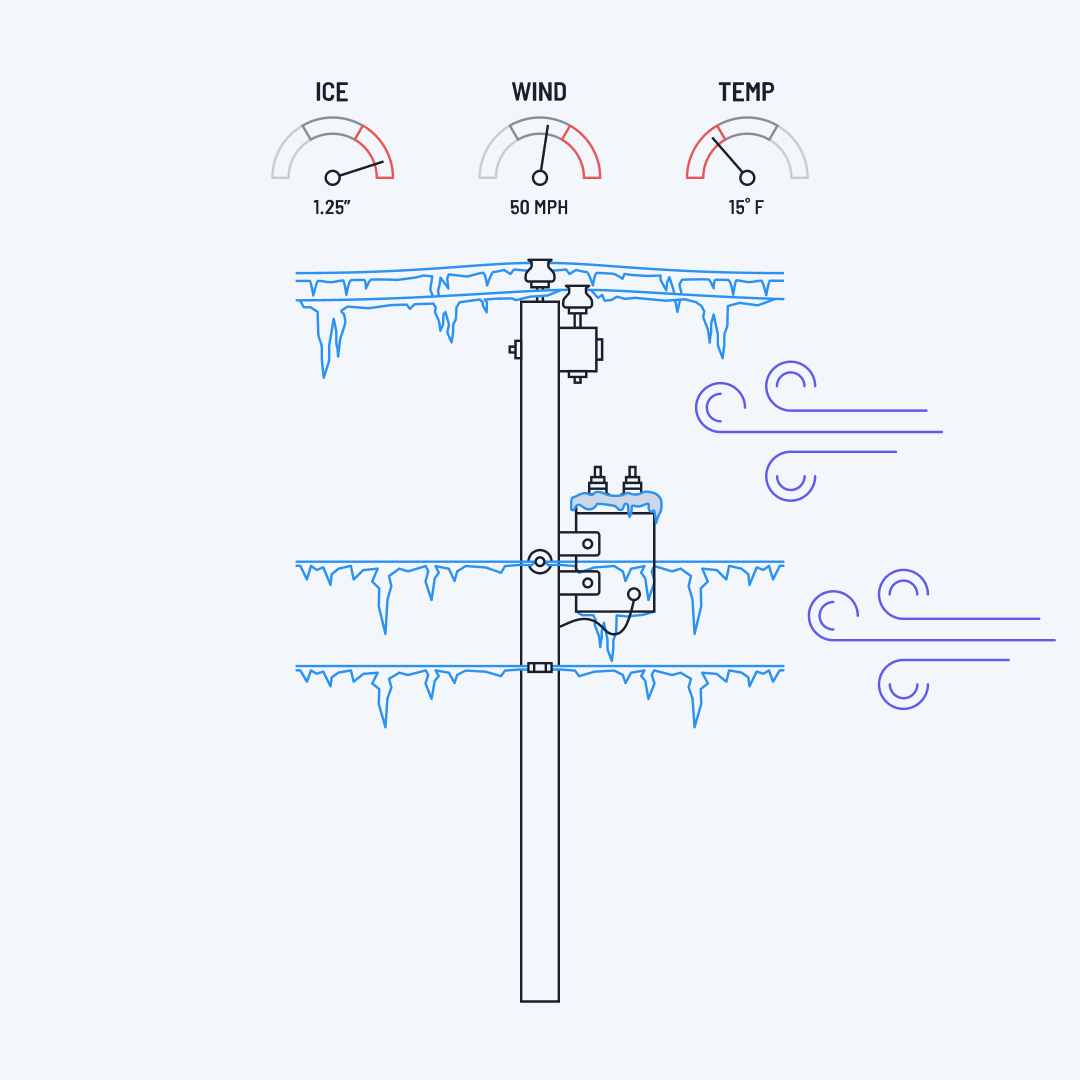
Performing pole loading analysis (PLA) using NESC load cases will help gain an understanding about the percent loading on the pole. Poles with utilization percentages at or above 100% do not meet NESC minimum requirements. This means that in the case of extreme climatic conditions the pole may fail and therefore should be replaced, reinforced or re-engineered.
PLA software options like IKE PoleForeman enable users to quickly model distribution networks and determine if NESC standards are met. In addition, users can quickly alter weather patterns and re-analyze loading for a high number of poles in a short period.
What do these structural analysis requirements mean for a more resilient network? They set the bar for a mitigation against environmental factors and provide the baseline for safety.
Know the Code. Stay safe.
Learn more about NESC and OSHA training classes with IKE
Grant Glaus is a registered professional electrical engineer with 25 years of experience in electric utility engineering, including line design, planning studies, joint use, and teaching NESC®, OSHA, and distribution line design classes. He has served on NESC® Subcommittee 5, Overhead Lines – Strengths and Loadings since 2006.

The latest from the IKE Wire
IKE Q3 2026 product updates
Over the last quarter, we added even more efficiencies to your field-to-finish workfl...
Read MoreNESC requirements for fiber-optic cables in the supply space
As a member of National Electrical Safety Code (NESC) committees and IKE’s NESC tra...
Read MoreHow to choose the right OSP data collection solution
Comparing five OSP field technologies and the common use cases they support When it c...
Read MoreSubscribe to the IKE Wire
Get the latest insights on data acquisition and structural analysis from the ikeGPS experts.