The PoleOS™ Company



How to choose the right OSP data collection solution
Comparing five OSP field technologies and the common use cases they support
When it comes to Outside Plant (OSP) field data collection, the technology you choose can make or break your project. From cost and accuracy to terrain access and regulatory compliance, every solution on the market comes with its own trade-offs. What works perfectly for a vegetation management flyover may be completely wrong for a utility pole attachment audit.
This guide breaks down each major technology type, who it’s built for, and how to match it to your project’s real-world requirements.
Understanding the OSP data collection landscape: Five technology categories
The OSP field data collection market has matured around five core approaches:
- Dedicated devices
- Mobile phone and app platforms
- Drone (UAV) systems
- LiDAR scanners
- Handheld GNSS receivers
Each sits at a different point on the spectrum of cost, accuracy, flexibility, and ease of deployment. Understanding the strengths and weaknesses of each — along with the OSP use cases they’re designed to serve — is the first step toward making the right choice.
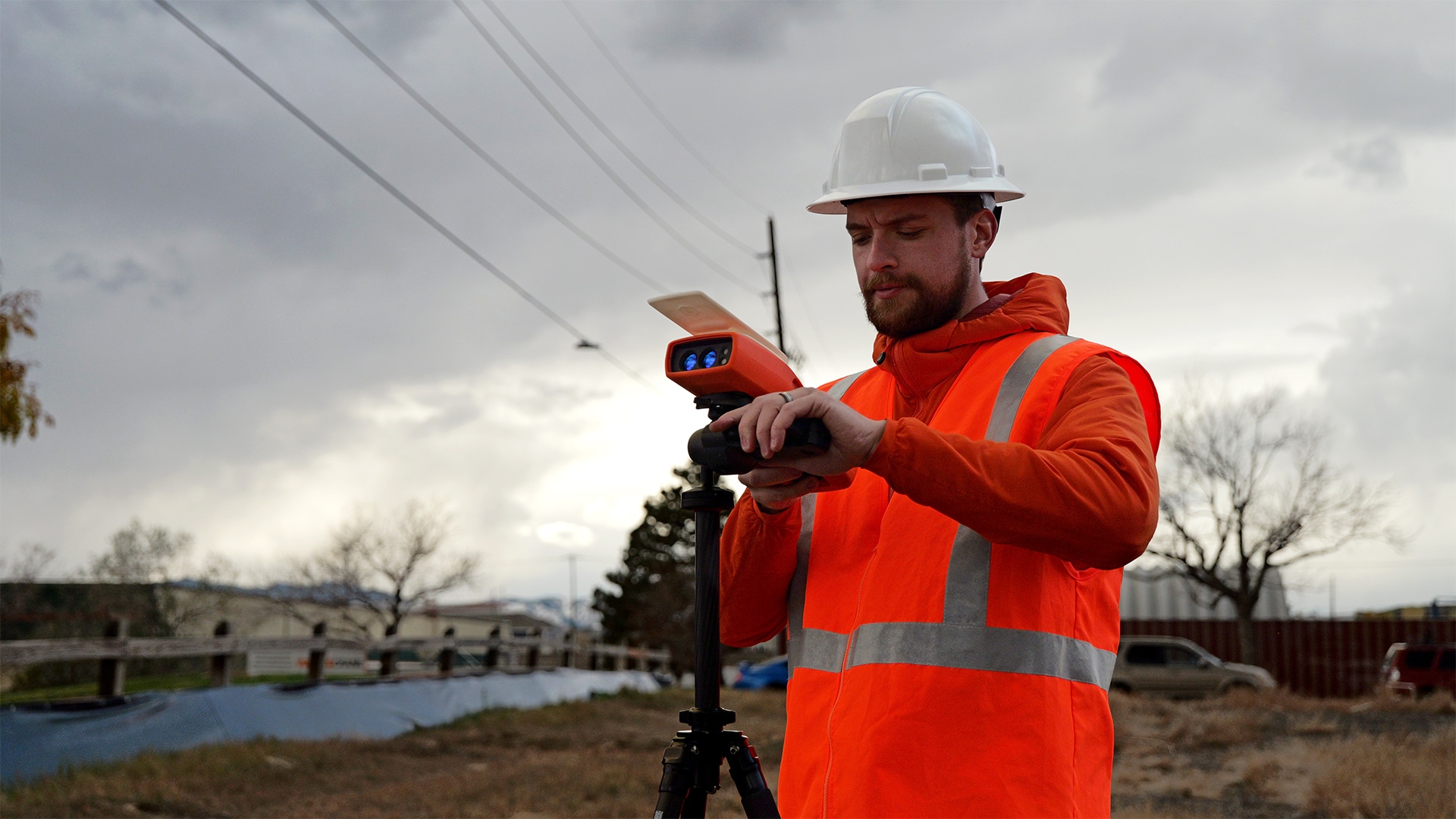
Purpose-Built Devices
Example: IKE Device
Strengths:
- Rugged design, engineered for OSP fieldwork
- Feature high-accuracy GNSS and long battery life
- Companion software supports integrated workflows with downstream applications, including pole loading analysis software
Best use cases: Utility and telecom companies running high-volume, accuracy-critical field programs (such as utility pole audits, telecom field surveys, or large-scale asset management) where durability and data integration outweigh flexibility concerns.
Mobile Phone/Camera + App Platforms
Examples: ArcFM Mobile, Survey123 (Esri), ArcGIS Field Maps
Strengths:
- Minimal hardware cost
- Fast deployment/minimal training
- Access to a rich app ecosystem
Best use cases: Quick inspections, pilot projects, or crowdsourced data collection initiatives where hardware endurance is more forgiving. Requires separate GNSS receiver for location precision.
Drones (UAV)
Examples: DJI, Parrot, Skydio
Strengths:
- Cover large areas quickly
- Provide high-resolution imagery
Best use cases: Vegetation management, corridor inspections, and route mapping projects where aerial coverage outweighs operator costs, regulatory restrictions, and overall operational simplicity.
LiDAR (Terrestrial or UAV)
Examples: Velodyne, Leica Geosystems, RIEGL
Strengths:
- Captures extremely accurate 3D point cloud data
Best use cases: High-value infrastructure modeling, topographic surveys, and complex terrain areas, where centimeter-level accuracy is required and budget allows. Must be able to support post-collection processing of dense point clouds to turn raw data into deliverables.
Handheld GNSS Receivers
Examples: Trimble, Garmin, Juniper Systems
Strengths:
- High positional accuracy
- Provide RINEX data for post-processing
Best use cases: Forestry, environmental monitoring, and remote survey programs where coordinate capture in off-grid environments is the primary requirement and workflow complexity is manageable downstream.
A decision framework: Four questions to ask
The choice comes down to your specific project constraints and how you plan to use the OSP data. Consider these questions before committing:
1. What accuracy does your project require?
2. What’s your operating environment (e.g. terrain, weather, hazards)?
3. How much area do you need to cover, and how fast?
4. What’s your total cost of ownership — not just hardware (e.g. training, licensing, and data processing and validation)?
The bottom line
There’s no universal winner in OSP field data collection — only the right tool for the right situation. The best organizations in this space don’t default to a single technology; they build a toolkit and develop the judgment to deploy each solution where it performs best. Start with your project’s accuracy requirements, operating environment, and team capabilities, then let those constraints guide you to the technology that fits. With a clear decision framework, the right choice is within reach.
Want to learn more about how IKE can support your use case? Contact our team for a tailored demo.
Elizabeth Etzel is Product Manager for IKE Office Pro’s mobile field data collection and data management solutions. With a foundation in geography, GIS and ecological fieldwork, Elizabeth began her career conducting environmental and biological surveys, before moving into environmental education. During her nearly eight years at IKE, she has served in roles across support, training, solutions engineering and product development. Elizabeth oversees product roadmaps, feature prioritization, user experience design and monthly release cycles. She leads discovery, requirements gathering and feedback sessions, collaborating closely with engineers and analysts to deliver customer-focused solutions. Her expertise spans GNSS, geospatial data, product integration, QA and technical writing, with a strong emphasis on improving workflows.
The latest from the IKE Wire
NESC requirements for fiber-optic cables in the supply space
As a member of National Electrical Safety Code (NESC) committees and IKE’s NESC tra...
Read MoreThe IKE Device now supports staking and a lot more utility fielding workflows
The latest round of IKE Device updates expands the scope of what a single field data ...
Read MorePole loading analysis as a risk management strategy for utilities
How to turn uncertainty on distribution asset health into quantified, manageable risk...
Read MoreSubscribe to the IKE Wire
Get the latest insights on data acquisition and structural analysis from the ikeGPS experts.